
Budget Wisely for Filter Replacements
What Pool Sand Filter Replacement Actually Costs in 2026
Labor, Parts, and Timing All Affect Your Final Bill
What You’ll Actually Pay for Sand Filter Replacement
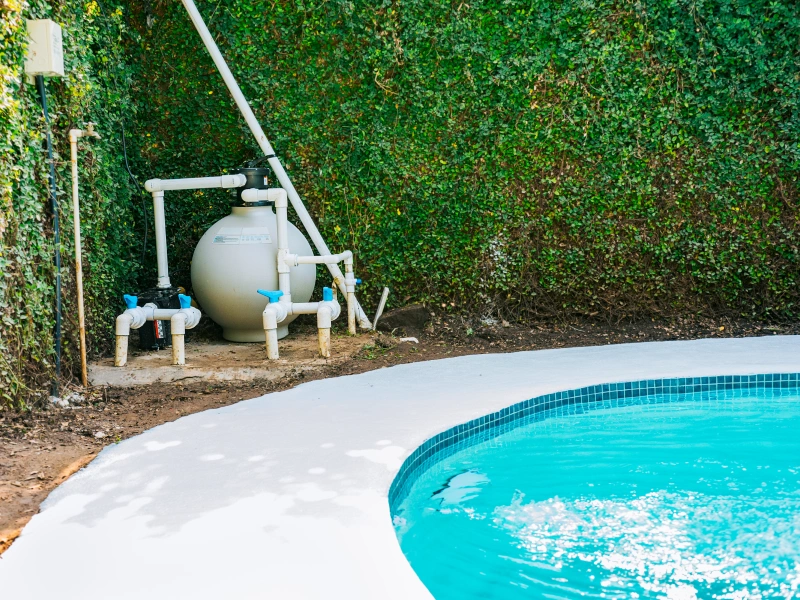
Understanding the investment required for a sand filter replacement begins with realistic price ranges. In the Hattiesburg area, homeowners typically spend between $400 and $900 for a complete sand filter replacement, including parts and labor. The majority of that expense comes from the filter tank itself, which ranges from $250 to $600 depending on size and quality, while sand costs another $40 to $80 per bag. Most residential systems need one to three bags.
Labor charges vary based on complexity and timing. During peak swimming months from May through early September, demand for pool maintenance and repair work increases significantly. Many local homeowners delay routine inspections until the first warm weekend, which creates scheduling bottlenecks. Booking replacement work in early spring or late fall often results in faster service and occasionally better rates, since technicians have more availability outside the summer rush.
The size of your filtration system drives much of the cost differential. A standard residential pool (15,000 to 20,000 gallons) typically requires an 18- to 24-inch diameter filter, while larger pools or those with attached spas need 30-inch units that command higher prices. Filter quality also matters. Basic models work adequately but may need replacement sooner, while commercial-grade tanks built with heavier fiberglass or polymer construction can last decades with proper care.
Regional factors influence availability and pricing as well. Mississippi’s humid subtropical climate means pools stay open longer than in northern states, which increases wear on filtration systems. Heavy pollen loads in spring and frequent afternoon thunderstorms during summer months put additional strain on filters, sometimes requiring more frequent sand changes than manufacturers recommend.
Why Costs Vary Across Different Pools
Not all sand filter replacements cost the same, and several variables determine where your project falls within the price spectrum. Filter size represents the most obvious factor. Smaller above-ground pools or compact in-ground designs may need only a 16-inch filter and a single bag of sand, keeping total costs near the lower end. Conversely, large in-ground pools, particularly those exceeding 25,000 gallons or featuring water features, require industrial-capacity filters that cost substantially more.
The condition of your existing plumbing and connections affects labor time significantly. If your current setup uses modern unions and easily accessible valves, a technician can complete the swap in two to three hours. Older installations with corroded fittings, outdated pipe materials, or filters buried behind landscaping take longer and require additional parts. Homes built before the mid-1990s sometimes have filter pads located in tight crawl spaces or behind dense plantings, which complicates access and increases labor charges.
Geographic location within the service area also plays a role. Properties in Hattiesburg proper or nearby Petal and Oak Grove benefit from shorter travel times, while homes in more distant service zones such as Columbia or Wiggins may incur additional trip fees. The route to your property and the ease of equipment delivery matter when technicians need to haul heavy filter tanks and multiple 50-pound sand bags from their trucks to your pool equipment pad.
Equipment age sometimes reveals hidden complications. A filter that has operated for 15 or 20 years may have valve assemblies, pressure gauges, or drain plugs that have become brittle or seized. Replacing these components adds to parts costs but prevents future leaks and operational headaches. Similarly, if your pump or other circulation equipment shows signs of wear during the inspection, addressing those issues simultaneously can save a second service call and additional labor expense down the road.
Unexpected Expenses to Budget For
Many homeowners budget for the filter and sand but encounter surprise costs during the replacement process. One common expense involves disposal and environmental fees. Used filter sand contains accumulated debris, oils, and contaminants collected over years of operation. While it is not classified as hazardous waste, many municipal facilities charge tipping fees or refuse to accept it, requiring separate disposal arrangements. Some service providers include this in their quotes, while others list it as a separate line item.
Plumbing modifications represent another frequent unplanned cost. Building codes and best practices evolve over time, and an installation that met standards two decades ago may not align with current requirements. Adding unions for easier future maintenance, upgrading from old gate valves to modern ball valves, or relocating pressure gauges to more visible positions all improve system performance but add $75 to $200 in parts and labor.
Concrete or decking work occasionally becomes necessary when the old filter sat on an undersized or deteriorating pad. A properly sized equipment pad supports the full weight of the filter, sand, and water without settling or cracking. If your existing pad shows structural damage or was never adequate for the new, larger filter you need, pouring a new concrete base adds several hundred dollars but protects your investment. Homes with extensive hardscaping or custom deck installations may require coordination with other contractors to maintain aesthetic consistency.
Electrical upgrades surface in homes where the original pool builder installed undersized breakers or outdated wiring. Modern variable-speed pumps and advanced filtration systems often require dedicated circuits and ground-fault protection. Bringing your system up to current National Electrical Code standards typically requires a licensed electrician, adding $200 to $500 depending on the scope of work. While not directly related to the filter replacement itself, discovering these issues during the service visit prevents future safety hazards and equipment damage.
When to Call a Service Team vs. Going It Alone
Some pool owners consider tackling sand filter replacement as a do-it-yourself project to save on labor costs. While certainly possible for those with mechanical aptitude and the right tools, several factors argue for hiring a service technician. The physical demands alone present challenges. A typical 24-inch filter tank weighs 80 to 100 pounds empty, and once you add 300 to 400 pounds of sand, maneuvering the unit requires strength and proper technique. Injury risks increase significantly when working with heavy equipment, tight spaces, and plumbing under pressure.
Technical knowledge prevents costly mistakes. Properly sizing the replacement filter, selecting the correct sand grade and quantity, understanding backwash valve configurations, and ensuring all connections seal correctly all require experience. An undersized filter forces your pump to work harder and never fully clears the water, while an oversized unit may allow water to channel through the sand bed instead of filtering properly. Using the wrong type of sand (such as play sand instead of #20 silica pool filter sand) compromises filtration effectiveness and may void warranties.
Warranty protection represents another consideration. Many manufacturers require installation by a qualified technician to honor their product warranties. Attempting the work yourself may save $200 to $400 in labor but could eliminate thousands of dollars in warranty coverage. If a manufacturing defect appears six months later, you would bear the full replacement cost rather than receiving a free or discounted unit.
Local service providers bring additional value beyond the physical installation. They inspect your entire circulation system during the visit, identifying worn pump seals, failing pressure gauges, or inefficient plumbing layouts that reduce system performance. This holistic assessment often reveals minor issues before they become expensive emergencies. Ongoing pool maintenance relationships with local technicians also provide faster response times when urgent repairs arise, since established customers typically receive priority scheduling.
The decision between DIY and professional service ultimately depends on your comfort level, available time, and long-term goals for your pool. For homeowners who view their pool as a long-term investment and value the convenience of pool cleaning service and maintenance support, partnering with a qualified local provider offers the best balance of cost, quality, and ongoing support.
If you are evaluating your filtration system and considering a replacement, a thorough assessment of your specific situation can clarify your options and provide an accurate cost estimate. Our team evaluates filter condition, plumbing configurations, equipment compatibility, and your budget to recommend the most effective solution. Contact us for a free estimate and let us help you maintain crystal-clear water throughout the swimming season.
Step-by-Step Replacement Process Explained
Some pool owners consider tackling sand filter replacement as a do-it-yourself project to save on labor costs. While certainly possible for those with mechanical aptitude and the right tools, several factors argue for hiring a service team instead. The decision depends on your comfort level with plumbing connections, understanding of backflow prevention, access to proper equipment, and willingness to troubleshoot complications that arise mid-project.
DIY replacement makes sense in limited scenarios. If you own a small above-ground pool with a straightforward filter setup, minimal plumbing complexity, and you have experience with similar mechanical work, you may successfully complete the task. You will need a dolly or hand truck to move the old filter (which can weigh over 100 pounds when full of wet sand), proper wrenches for union connections, plumber’s tape, and several hours of uninterrupted time. You will also need to source the correct grade and quantity of filter sand, which many home improvement stores stock seasonally but not year-round.
For in-ground pools, the calculation shifts dramatically. These systems often incorporate multi-port valves, backwash lines, chemical feeders, and integrated automation that require calibration after filter replacement. A single misaligned connection or improperly seated o-ring can lead to air leaks that reduce filtration efficiency or cause the pump to lose prime. In the humid Hattiesburg climate, where algae blooms develop quickly during warm months, even a few days of compromised filtration can turn your pool green and require extensive chemical treatment to restore clarity.
Timing also matters. If your filter fails during peak swimming season (typically May through September in this region), you face pressure to restore operation quickly. Waiting for parts, troubleshooting installation errors, and learning the process on the fly extends your pool’s downtime considerably. A qualified team completes most replacements within a few hours, restoring full functionality the same day. This speed becomes especially valuable when you have planned gatherings, when children are out of school for summer, or when hot weather makes the pool your primary cooling refuge.
Warranty considerations further complicate the DIY decision. Many filter manufacturers honor warranties only when installation follows specific procedures and is performed by qualified technicians. Improper installation can void coverage, leaving you financially responsible for premature equipment failure. Service teams document their work, provide receipts that establish warranty validity, and stand behind their installations with service guarantees (when offered by the business).
Beyond the immediate replacement, ongoing pool maintenance determines how long your new filter performs optimally. Regular backwashing, monitoring pressure gauges, maintaining proper water chemistry, and periodic inspection of seals and gaskets extend filter life significantly. Establishing a relationship with a local service provider creates continuity. The same team that installs your filter can provide routine maintenance, catch developing problems early, and respond quickly when issues arise.
For homeowners throughout Hattiesburg, Petal, Laurel, and surrounding communities, professional installation offers tangible advantages: correct sizing for your specific pool volume and turnover requirements, proper connection to existing plumbing without leaks or air intrusion, calibration of multi-port valves and automation systems, disposal of old sand according to local regulations, and immediate troubleshooting if the system does not operate as expected after installation.
Making the right choice between DIY and service-based installation depends on honest assessment of your skills, available time, tool access, and risk tolerance. For most homeowners, the combination of specialized knowledge, proper equipment, warranty protection, and rapid completion makes working with a qualified team the practical choice. If you are weighing your options or need guidance on the best approach for your specific pool setup, we invite you to contact us for a free estimate. Our team will assess your system, explain your options clearly, and provide transparent pricing so you can make an informed decision that fits your budget and timeline.